

If you’re considering a Gold IRA in 2026, you’re not alone. Rising concern about inflation, market volatility, and retirement longevity has pushed more investors to look for portfolio ballast—assets that behave differently from stocks and bonds. Physical gold can play that role, but only if you choose the right structure, the right custodianship, and—most importantly—the right dealer.
This guide is designed for buyers with strong intent: people who want to compare the best gold IRA companies, understand the real costs, spot common sales traps, and confidently select a provider that fits their goals.
Disclosure: We may earn compensation from some links or partner placements. That never changes our evaluation criteria or final recommendations, Learn more.
Not financial advice: This content is informational. Consult a qualified tax professional or financial advisor for advice specific to your situation.
Written by Mike Reeves
Mike Reeves is a Gold IRA and precious metals IRA specialist with over 10 years of industry experience, having evaluated dozens of providers across the United States. He has helped hundreds of investors roll over traditional retirement accounts into precious metals IRAs, with a focus on fee transparency, compliant storage, and investor-first guidance.
Last updated: January 2026
Key Takeaways
- The “gold IRA company” you see advertised is usually the metal dealer; your account is legally held by an IRA custodian, and your metals are stored at an approved depository.
- In 2026, IRA contribution limits increased: the IRS announced the annual IRA contribution limit is $7,500, with a $1,100 catch-up amount for age 50+ (subject to eligibility rules).
- The best providers differentiate themselves with: transparent fee disclosure, fair pricing on metals (reasonable spreads), straightforward buyback policies, and compliant storage options—not fear-based marketing.
- Regulators have warned retirees about precious-metals fraud and misleading markups; asking the right questions up front is non-negotiable.
How We Evaluated These Companies
To rank the best Gold IRA companies, we used a consistent, investor-first framework built around the factors that most directly affect outcomes: total cost, pricing transparency, rollover execution, storage compliance, and real-world support. Our goal is to highlight providers that operate clearly and fairly—without pressure tactics, vague pricing, or misleading claims.
What we evaluated (the criteria that matter most)
- Fees and cost predictability: We looked for clear disclosure (or clear written confirmation) of custodian fees, storage/insurance costs, and any recurring administrative charges. See Gold IRA Fees.
- Pricing integrity (premiums/spreads): Because dealer markups vary by product and are not always published, we favored companies that support itemized quotes and do not default to pushing high-premium products as the “standard” IRA recommendation.
- Rollover and transfer quality: Step-by-step guidance, paperwork accuracy, realistic timelines, and clear explanations of transfer vs. rollover mechanics. See how a Gold IRA Rollover works.
- Custodian and depository quality: Reputable custodian partnerships, IRS-compliant depository storage, and clear options such as segregated vs. non-segregated storage where offered.
- Buyback and liquidity clarity: Whether buyback is available, how liquidation works, and how repurchase pricing is determined.
- Customer experience patterns: Consistent themes in consumer feedback—especially around responsiveness, complaint handling, and sales pressure.
How we built the shortlist
We started with companies that appear consistently in reputable third-party roundups and/or provide strong public disclosures. We then cross-checked each provider’s minimums, fee structure, storage/custodian relationships (when publicly stated), and recurring concerns (e.g., unclear pricing, upsell-heavy calls, or confusing storage narratives).
Important limitations (read this before choosing)
Your “all-in cost” is not just annual fees—your biggest variable is often the premium/spread on the exact coins or bars you purchase, and many dealers do not publish live pricing online. Because quotes vary by product, order size, and market conditions, we recommend requesting itemized written quotes and comparing at least two providers using the same IRA-eligible products before funding an account.
Want the full due-diligence on each provider? Read our in-depth Gold IRA company reviews for a standardized breakdown of fees, pricing discipline, rollover reliability, storage options, and buyback reality—so you can compare companies on the same criteria before requesting quotes.
Best Gold IRA Companies 2026 (Quick Rankings)
Below are the category winners based on 2026 third-party rankings and publicly available disclosures, combined with buyer-first evaluation criteria (fee transparency, storage flexibility, education quality, complaint patterns, and “pressure level”).
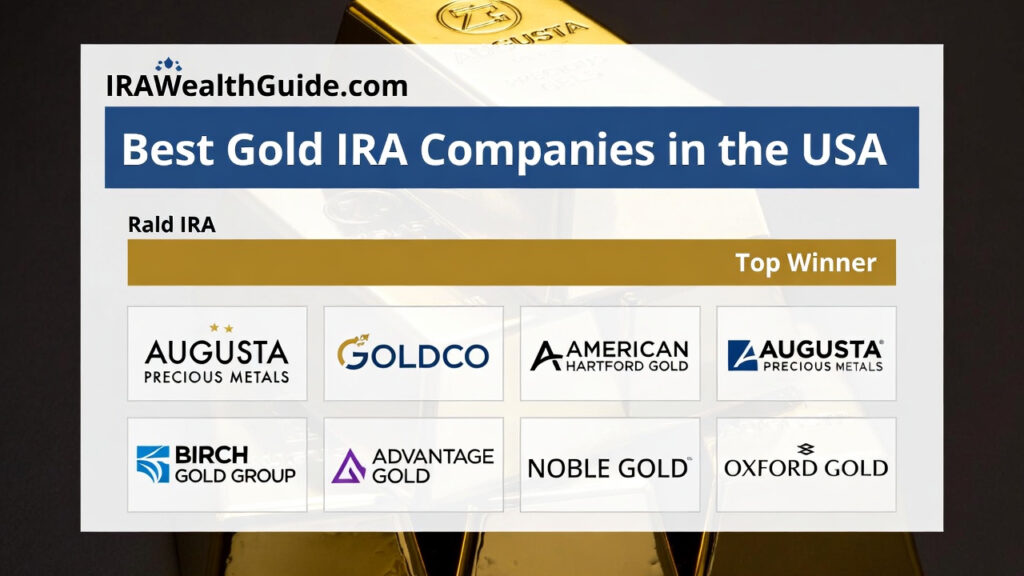
Our Top Picks for 2026
- Best Overall: Augusta Precious Metals
- Best for Customer Popularity: Advantage Gold
- Best for Low Fees: American Hartford Gold
- Best for Fee Transparency: Birch Gold Group
- Best for Customer Service: Goldco
- Best for Diverse Storage Options: Noble Gold Investments
- Best for Small-Balance Investors: Orion Metal Exchange
Comparison Table: Minimums, Fees, Storage, and “Best For”
Important: The exact metal price you pay (your “all-in cost”) depends on product selection and dealer spread/premium, which is often not shown online. Treat “annual fees” as the account’s administrative + storage baseline, then compare dealers on pricing discipline and buyback terms.
| Company | Best For | Minimum Purchase Order | Typical Annual IRA/Admin Fees* | Storage / Custodian Options |
|---|---|---|---|---|
| Augusta Precious Metals | Overall experience + education | $50,000 | ~$225/yr after setup | Uses Delaware Depository; fee sheet published |
| Advantage Gold | Popularity + strong reviews | Not provided | Varies by custodian | Uses STRATA + Equity Trust; Brink’s + Delaware |
| American Hartford Gold | Low fees + promos | $10,000 IRA | $175–$225+ typical | Primarily Equity Trust; segregated/unsegregated |
| Birch Gold Group | Fee transparency | $10,000 | Flat-rate model (varies) | Equity Trust or STRATA; Delaware or Brink’s |
| Goldco | Customer service | $10,000 IRA | ~$80 admin + storage $100–$150 | Multiple storage tiers; custodian fees apply |
| Noble Gold Investments | Storage flexibility | $20,000 | ~$230 baseline (per published estimate) | Multiple storage locations + options |
| Orion Metal Exchange | Smaller starting balances | $5,000 | ~$190 under $500k | Equity Trust + storage included in model |
*Typical annual fees shown are “account-level baseline costs” (custodian + storage) and do not include dealer spreads/premiums on metals.
Data sources for minimums, category awards, and many fee descriptions: Money’s January 2026 rankings and company highlights.
Augusta’s published fee sheet:
In-Depth Reviews: Best Gold IRA Companies (2026)
1) Augusta Precious Metals — Best Overall
Best for: High-touch guidance, education-first process, investors with $50k+ who want a structured, low-drama rollover experience.
Why Augusta ranks “Best Overall” in 2026
Independent rankings highlight Augusta for its educational content and overall experience, with a $50,000 minimum purchase order.
A standout point in a category where fee vagueness is common: Augusta publishes a straightforward fee sheet that clearly shows an example setup total and annual recurring fees.
Augusta fees (what you can verify)
From Augusta’s published fee sheet (example shown with an Equity custodian):
- One-time setup total (example): $275
- $50 custodian application fee
- $125 annual custodian fee
- $100 sample storage fee
- Recurring annual total: $225
- $125 custodian maintenance
- $100 storage
Buyer note: These are account/admin fees. You still must evaluate Augusta’s metal pricing (spread/premium) product-by-product.
Pros
- Clear baseline fee disclosure (rare in this niche).
- Strong educational positioning and “anti-scare-tactics” tone noted in third-party reviews.
- Fit for investors who value process clarity over “flash deals.”
Cons
- High minimum purchase order ($50,000).
- As with any dealer, the real test is the quote you receive on specific bars/coins.
Who should choose Augusta
Choose Augusta if you:
- Want structured guidance and fewer surprises
- Prefer published, predictable baseline fees
- Are rolling over a mid-to-large retirement balance and want a “white glove” approach
Smart questions to ask Augusta (use these verbatim)
- “What is the all-in price per ounce for the products I’m considering (including your premium over spot)?”
- “Do you recommend bullion coins or bars for my situation—and why?”
- “What’s your buyback process and how is pricing determined at liquidation?”
2) Advantage Gold — Best for Customer Popularity
Best for: Investors who want broad metal options (gold/silver/platinum/palladium) and care heavily about third-party review volume and overall popularity.
Why Advantage Gold stands out
Money’s January 2026 list cites Advantage Gold’s review strength and education focus, while noting that the minimum purchase order is not provided publicly.
Advantage also offers multiple custodian/depository combinations, including:
- Custodians: STRATA Trust Company and Equity Trust Company
- Depositories: Brink’s and Delaware Depository
Pros
- Broad metal menu (including platinum/palladium).
- Multiple custodian and storage options (flexibility matters if you want segregated storage or a specific facility).
- Education-forward positioning.
Cons
- Limited account fee info disclosed online (you’ll need written confirmation).
Buyer psychology insight
When a company is extremely popular, it often means they are very good at onboarding and communication—but popularity is not the same thing as best pricing. Your protection is a quote comparison discipline: get at least two competitive quotes on the same IRA-eligible items before committing.
3) American Hartford Gold — Best for Low Fees
Best for: Cost-conscious investors who want low friction on setup/transfer fees and appreciate promotions (with the discipline to evaluate what promotions really cost).
Why American Hartford Gold is a top pick in 2026
Money’s 2026 review highlights:
- No setup fee or transfer fee (as stated in the review)
- Minimum purchase order: $10,000 for IRAs, $5,000 for non-IRA purchases
- Promotions that may waive storage fees for 2–3 years
It also specifies baseline fees you can sanity-check:
- $50 custodian establishment fee
- Annual IRA fee: $75 for accounts ≤ $100,000; $125 for accounts ≥ $100,001
- Storage: $100 annually “in most cases”
Storage guidance (and an important compliance signal)
On American Hartford Gold’s own site, the company explicitly discourages home storage for IRA metals and recommends using an IRA depository such as Brink’s or Delaware Depository, while noting relevant Internal Revenue Code sections.
This is a trust signal: reputable operators generally avoid endorsing “store it at home inside the IRA” narratives because they can create compliance risk.
Pros
- Strong baseline fee clarity for a dealer (via third-party review details).
- Minimum threshold is accessible for many investors ($10k IRA).
- Storage structure options (segregated vs unsegregated) and promotions.
Cons
- Education resources may require email access (friction + marketing).
- Promotions can mask pricing: “free silver” or “fee waivers” can be offset by higher spreads on metals.
Best-fit buyer profile
American Hartford Gold can be a fit if:
- You’re fee-sensitive
- You want an established rollover flow
- You are comfortable comparing product quotes to ensure promotions don’t raise your all-in cost
4) Birch Gold Group — Best for Fee Transparency
Best for: Investors who want fee clarity, flat-rate structures (often better for larger balances), and the ability to choose among custodians and depositories.
Why Birch wins on transparency
Money’s January 2026 review emphasizes that Birch is one of the few providers with transparent fees on its site, plus:
- Minimum purchase order: $10,000
- Custodian choices: Equity Trust or STRATA Trust
- Storage choices: Delaware Depository or Brink’s Global Services
Birch also publishes educational guidance on gold IRA costs. One Birch article states custodian fees cost “around $235 for most customers” and notes typical one-time custodian fees like a $50 setup and $30 wire transfer fee.
Additionally, Birch’s pricing/fees page explains that first-year fees may be waived at certain purchase thresholds (details and eligibility vary).
Pros
- Strong fee discussion and transparency posture.
- Flat-fee structures can be advantageous as your account grows.
- Multiple custodian/storage combinations (important if you care about location or segregated storage).
Cons
- Flat fees can feel expensive for small balances (percent-of-assets models sometimes look cheaper early—though they can become costly later).
- Transfer timing may take longer depending on custodians and paperwork flow.
Best questions to ask Birch
- “What is the complete first-year fee schedule for the exact custodian + depository I choose?”
- “Are fees waived at my purchase level, and if so, for how long—and where is that stated in writing?”
- “What are the transaction fees for future buys/sells inside the IRA?”
5) Goldco — Best for Customer Service
Best for: Investors who want strong handholding, responsive support, and simple storage tier choices—especially if you’re new to SDIRAs.
Why Goldco is strong for service in 2026
Money’s January 2026 ranking places Goldco as “Best for Customer Service,” with a $10,000 minimum purchase order for IRAs.
The same review includes a useful baseline fee disclosure via custodial details:
- $50 setup fee
- $80 annual maintenance fee
- Storage: $100 (non-segregated) or $150 (segregated)
Pros
- Service reputation and onboarding support (especially for first-time rollover investors).
- Clear storage tiering (segregated vs non-segregated).
- Wide metal availability (per third-party highlights).
Cons
- Limited fee and pricing detail directly on site is a common critique in reviews.
Practical advice
If you choose Goldco (or any service-led dealer), your smartest move is to ask for:
- A line-item list of custodian fees + storage fees
- The exact items you’re buying
- The per-item premium over spot
Then compare that same list with at least one competitor quote.
6) Noble Gold Investments — Best for Diverse Storage Options
Best for: Investors who care about storage location flexibility and want optionality beyond “one depository, one state.”
Why Noble makes sense in 2026
Money’s review lists:
- Minimum investment: $20,000
- Estimated annual fees: $80 annual account fee + $150 insurance and segregated storage
It also highlights storage choices including:
- Delaware Depository
- International Depository Services (Texas and Delaware)
Pros
- Storage flexibility (a real differentiator if you care about location strategy).
- Clear baseline annual fee estimate in major third-party review coverage.
Cons
- Higher minimum than some competitors ($20k).
Storage note (why “diverse storage” can matter)
Many investors assume storage is a commodity. In practice, storage decisions affect:
- Cost (segregated vs commingled)
- Liquidity experience (how distributions/liquidations are handled)
- Personal comfort (geographic preference, facility trust)
7) Orion Metal Exchange — Best for Small-Balance Investors
Best for: Investors who want a lower barrier to entry and prefer a simplified annual cost model.
Why Orion is a 2026 “small-balance” pick
Money’s review notes:
- Minimum order: $5,000
- Annual cost: $190 for accounts under $500,000 and $260 for accounts $500,000+ (covers account setup, annual maintenance, and storage via Equity Trust + IDS of Delaware)
Pros
- Accessible minimum ($5k).
- Bundled annual cost model can reduce uncertainty.
Cons
- Always validate how the bundled model interacts with future transactions (additional buy/sell fees may apply depending on structure).
How a Gold IRA Works (Plain English)
A Gold IRA is typically a self-directed IRA (SDIRA) that allows you to hold alternative assets, including certain IRS-eligible precious metals, instead of (or alongside) conventional holdings like mutual funds and bonds.
In almost every legitimate structure, you will have three separate entities:
- Dealer (the “gold IRA company”) – sells you the metals
- Custodian – administers the IRA and maintains tax-advantaged status
- Depository – stores the metals under custody/chain-of-control requirements
This separation matters because many complaints in this category stem from buyers thinking the “dealer” controls everything. They don’t—and they shouldn’t.
Gold IRA Rules in 2026: Contributions, Eligibility, and IRS Compliance
2026 IRA contribution limits (important for new contributions)
The IRS announced that in 2026:
- The annual IRA contribution limit is $7,500
- The IRA catch-up contribution limit for age 50+ is $1,100
Roth IRA income phase-outs (2026)
Income limits for Roth IRA eligibility change periodically. An IRS bulletin for 2026-related adjustments shows phase-out ranges increasing (for example, singles/head of household listed between $153,000 and $168,000 in the referenced IRS bulletin context).
Practical note: Gold IRAs are often funded via rollovers/transfers rather than annual contributions, but contribution limits still matter if you’re adding new money.
IRS rules on what metals are eligible
The IRS treats most “collectibles” as disallowed inside retirement accounts. However, exceptions exist for certain coins and bullion that meet fineness standards and are held by an approved trustee/custodian in physical possession.
A depository resource summarizing IRC 408(m)(3) explains typical fineness thresholds used by the industry:
- Gold: 99.5%
- Silver: 99.9%
- Platinum & palladium: 99.95%
…and notes the common exception for American Gold Eagles.
Storage compliance: why “home storage gold IRA” is a risk magnet
If someone pitches you: “You can keep IRA gold at home, legally, inside your IRA,” treat it as a high-risk claim and validate it with your tax counsel.
Even major dealers warn against home storage for IRA metals. American Hartford Gold explicitly states it does not recommend home storage for precious metals IRAs and recommends depository storage for IRA compliance.
What a Gold IRA Really Costs (Fees + Spreads)
Most buyers underestimate the true cost because they only look at custodian/storage fees and ignore the dealer spread (premium above spot), which can dwarf annual account fees.
Cost bucket 1: Custodian fees
Often include:
- Setup fee
- Annual administrative/maintenance fees
- Transaction or wire fees (sometimes)
Example transparency signal: Augusta’s published sheet shows first-year setup example totals and recurring annual totals.
Cost bucket 2: Depository storage + insurance
Storage generally depends on:
- Segregated vs commingled
- Metals type and total value
- Depository pricing schedules
Cost bucket 3: Dealer spread/premium (the most abused area)
This is the “silent killer” of returns: you can pay thousands more than you realize if the dealer pushes high-premium “collectible-style” coins, or if the spread is inflated.
Regulatory reality check
The SEC charged a precious metals firm (Red Rock Secured) alleging markups as high as 130%, with fear-based marketing used to drive retiree decisions.
That does not mean every dealer does this—but it proves why you must ask for the per-item pricing and compare.
Red Flags: How to Avoid Gold IRA Scams and Bad Deals
If you remember nothing else, remember this: the fastest way to lose money in a gold IRA is not gold’s price movement—it’s buying overpriced products under pressure. See Gold IRA Scams and Red Flags.
Top red flags
1) Fear-first sales scripts
If the pitch is 80% political/economic doom and 20% pricing transparency, step back. Regulators have explicitly warned that fraudsters use emotional manipulation in the precious-metals space.
2) “Today only” bonuses
“Free silver,” “fee waivers,” and “limited-time specials” can be legitimate promotions—but they can also be funded by higher spreads.
3) Evasive answers about spreads
If you ask: “What premium am I paying over spot?” and the rep refuses to answer directly, that’s a problem. Reputable operators should be able to quote you clearly.
4) Pushing numismatic/collectible coins as the default IRA choice
Not all premium coins are disallowed, but many are poor fits for retirement accounts if the premium is steep and liquidity is questionable.
What regulators recommend asking
The CFTC and FINRA released a bulletin specifically warning retirees and listing questions to ask before buying physical precious metals, including fee transparency and fraud awareness.
The SEC also warns about fraud risks in self-directed IRAs and the importance of investor caution.
Step-by-Step: How to Open or Roll Over a Gold IRA (2026)
Step 1: Choose the structure (transfer vs rollover)
- IRA transfer (trustee-to-trustee): Often simpler and lower risk of timing mistakes
- 401(k) rollover: Common when leaving an employer; confirm plan rules first
Step 2: Choose a custodian (not just a dealer)
Your dealer may recommend custodians (common), but you should still understand:
- Fee schedule
- Transaction fees
- Processing speed
- Asset reporting
Step 3: Select IRA-eligible metals (and avoid “accidental distributions”)
The IRS treats disallowed collectibles as a distribution at cost in the year acquired (in relevant retirement account contexts), which is why product eligibility matters.
Step 4: Choose storage (segregated vs commingled)
Ask explicitly:
- Where will metals be stored?
- Is storage segregated or commingled?
- What are the annual fees and insurance terms?
- How are distributions handled (in-kind vs liquidation)?
Step 5: Demand a written, itemized trade confirmation
Before you fund, ask for:
- Product list (exact coins/bars)
- Per-item price
- Premium over spot at time of trade
- All custodian + storage fees
- Buyback terms (how they determine repurchase pricing)
FAQs: Best Gold IRA Companies 2026 (People Also Ask)
What is the best gold IRA company in 2026?
For overall experience and education-first onboarding, Augusta Precious Metals is frequently ranked highly, including as “Best Overall” in Money’s January 2026 list.
What is the cheapest gold IRA company?
“Cheapest” depends on two numbers:
- baseline annual account/storage fees
- your all-in premium/spread on the metals you buy
American Hartford Gold is highlighted for low fees, and Money lists specific annual fee components (custodian establishment + annual IRA fee + typical storage fee).
How much does a gold IRA cost per year?
Expect two layers:
- Custodian + storage baseline (often a few hundred dollars annually)
- Dealer spread (varies widely by product and dealer; can be the largest cost)
Examples of published baselines include Augusta’s $225 recurring annual example and Goldco’s $80 annual maintenance plus storage tier costs.
Can I store IRA gold at home?
Major dealers explicitly discourage home storage for IRA metals, citing compliance risks and recommending approved depository storage.
What gold is IRA eligible?
IRA eligibility is governed by IRS rules around collectibles and exceptions for certain coins and bullion meeting fineness standards held by an approved trustee/custodian.
Bottom Line: How to Choose the Right Gold IRA Company in 2026
A “best gold IRA company” is not simply the one with the biggest ad budget or the loudest promises. The best choice is the one that can provide, in writing:
- Transparent custodian and storage fees
- Competitive, clearly explained pricing on the exact metals you’re buying
- Straightforward buyback process
- Compliance-first storage and product eligibility discipline
- A low-pressure experience that respects your decision timeline
If you want a practical short list:
- Start with Augusta if you’re investing $50k+ and want published baseline fee clarity.
- Consider American Hartford Gold if you’re optimizing for low fees and want accessible minimums.
- Choose Birch if fee transparency and flat-rate structures matter most.
- Use Goldco if you value support and want clearly defined storage tiers.
- Look at Noble if storage location flexibility is a priority.
- Consider Orion if you’re starting smaller and want a simplified annual cost model.
For full details on our standards, see our Review Methodology and Editorial Policy pages.